ATEX regulations
5 min de lecture



Optimising the storage of raw materials is a performance driver that is often underestimated in the food and chemical industries. Between the flexible fabric silo and the rigid resin silo or steel silo, the choice depends not only on budget, but on a detailed analysis of your technical environment and the nature of your powders. Syvrac has been supporting professionals in this decision-making process for over 10 years, as an incorrect assessment can quickly lead to unexpected maintenance costs or production line stoppages.
The challenge? Ensuring a smooth transfer process whilst preserving the integrity of the finished products, whether it be flour for an industrial crêperie or plastic pellets.
Here, we will explore the key criteria: building constraints, humidity levels, and material-specific characteristics to guide your investment towards the most sustainable solution. Making the right choice between a self-supporting fabric structure and a GRP (Glass-Reinforced Polyester) silo requires planning for the next ten years.

Sommaire
In many food processing plants, particularly older facilities of the BVP (Bakery, Viennese Pastries, Patisserie) type or industrial crêperies, space is a scarce resource.
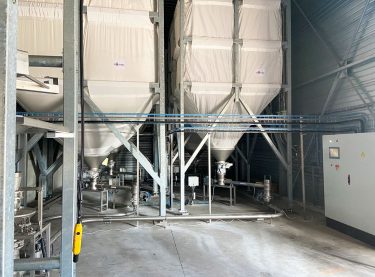
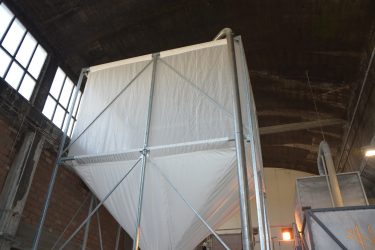
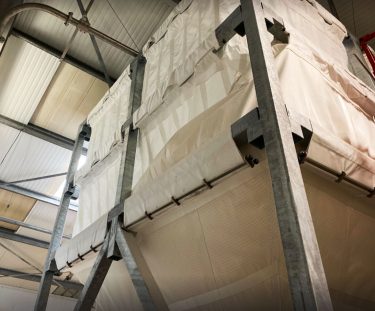
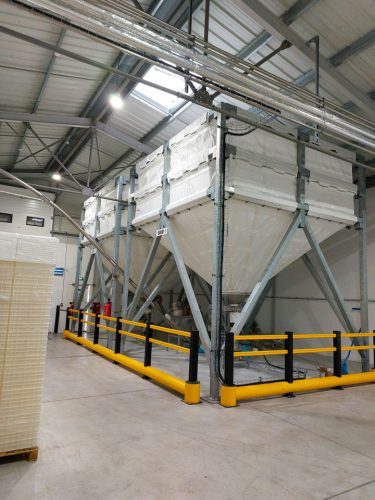
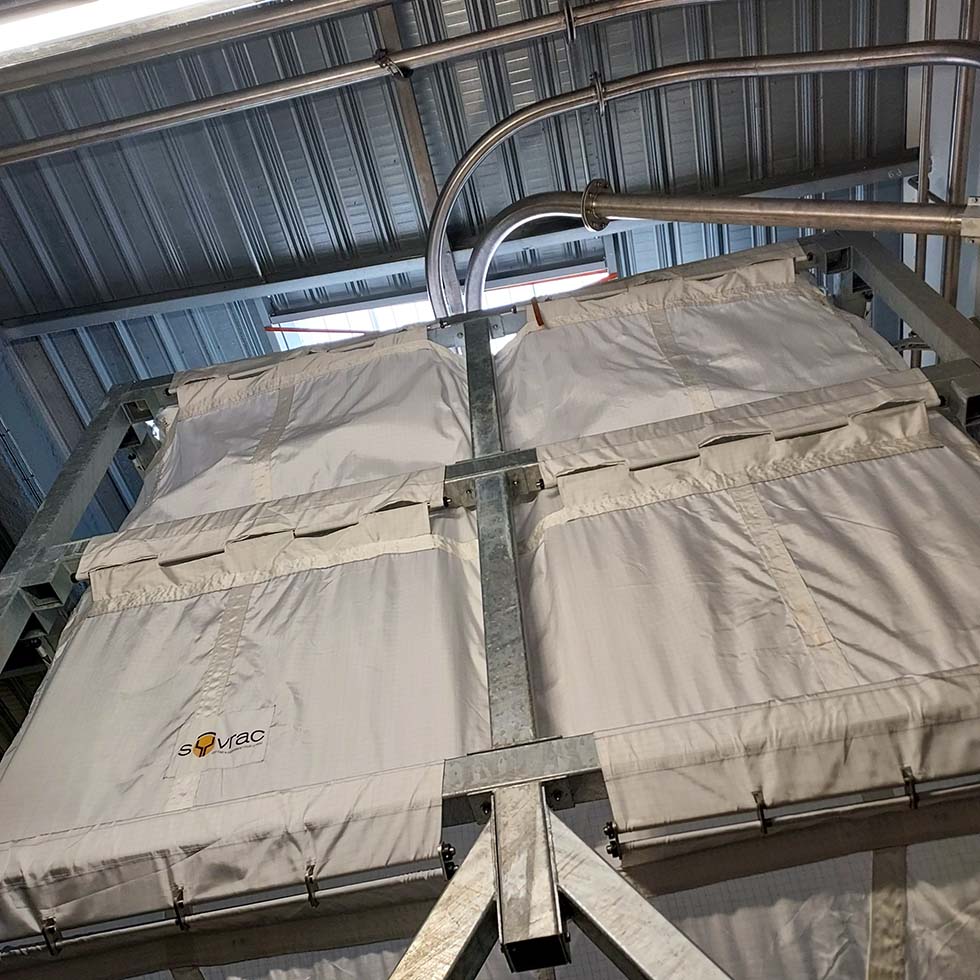
Installing a storage solution often involves dealing with low ceilings, obstructive structural columns or narrow access points. This is where the flexible silo demonstrates its technical superiority. Unlike a rigid monocoque unit, the high-strength fabric is deployed inside a metal frame, often assembled on site, thus adapting to the available floor space down to the nearest centimetre.
No, the flexible silo is intended exclusively for indoor use. Although its technical fabric construction is extremely robust and capable of holding tonnes of powdered materials, it is not designed to withstand direct exposure to the elements, such as strong gusts of wind, prolonged UV exposure or rainwater seepage through capillary action.
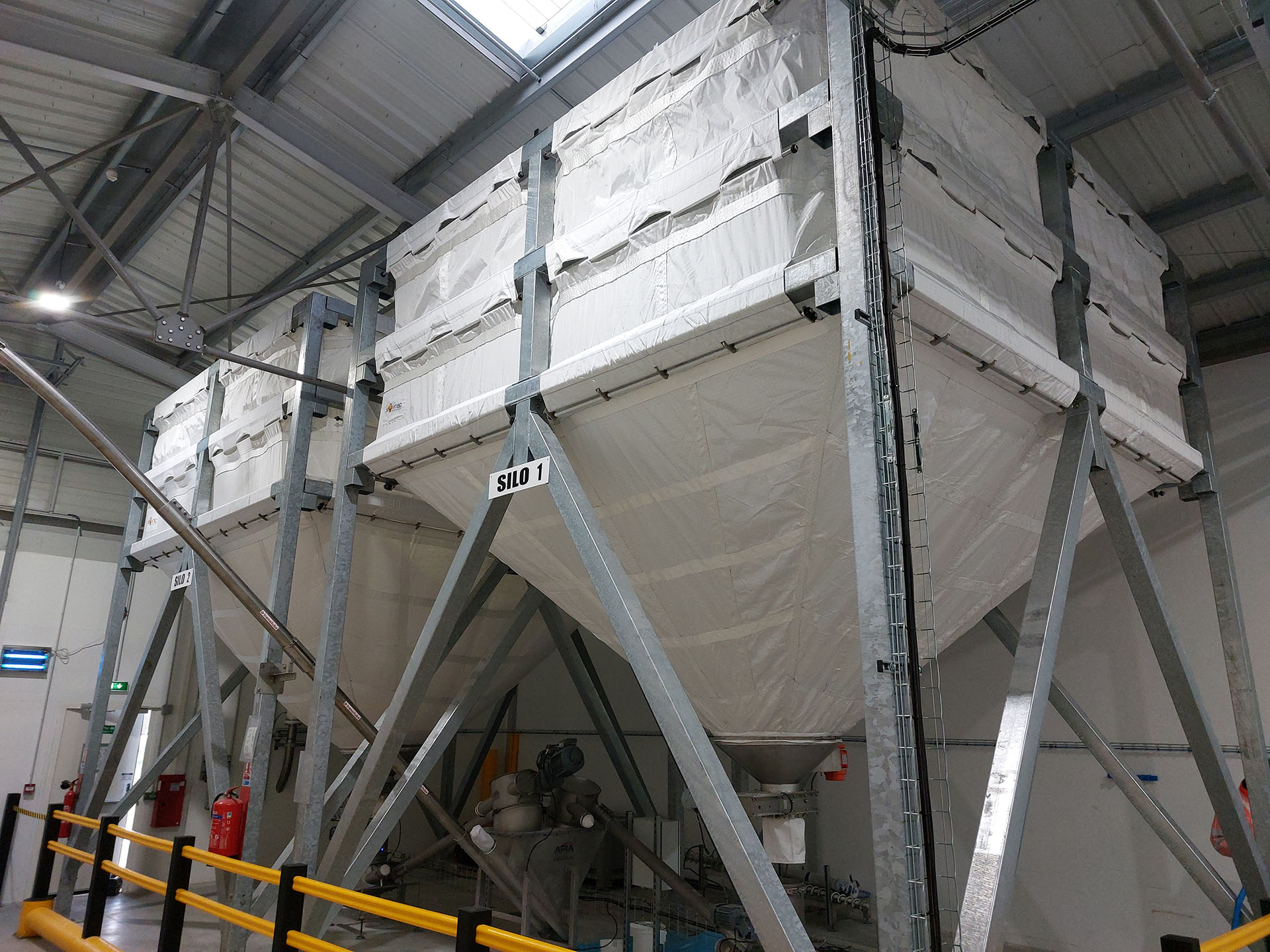
The technical fabric used (often high-tenacity polyester) has breathability properties that are essential for preventing condensation. However, this very characteristic makes the silo vulnerable to the elements. Exposure to the elements would lead to rapid degradation of the fibre and, above all, massive moisture absorption in your stock of flour, sugar or cereals.
If your project requires an outdoor installation, the rigid resin or steel silo then becomes the only viable option. Indoors, however, the flexible silo allows you to optimise storage volume without the need for complex planning permission or major civil engineering works.
Quick assembly is another key factor. A flexible silo can be installed and commissioned in a matter of days, without having to excavate a foundation slab or hire massive telescopic cranes to access the roof. This modularity also allows the installation to be moved if the layout of your production lines changes, a strategic advantage for maintenance and new works managers.
The choice of storage system has a direct impact on the rheology of your powders. A material that flows poorly, clumps or oxidises can lead to a production line stoppage or a non-compliant finished product. This is where the physics of materials comes into play: the porosity of the fabric contrasts with the airtightness of the resin.
The great strength of high-tenacity fabric lies in its air permeability. During pneumatic filling, air escapes through the fabric’s mesh, which significantly reduces condensation. This is a critical factor for sensitive products such as flour or sugar.
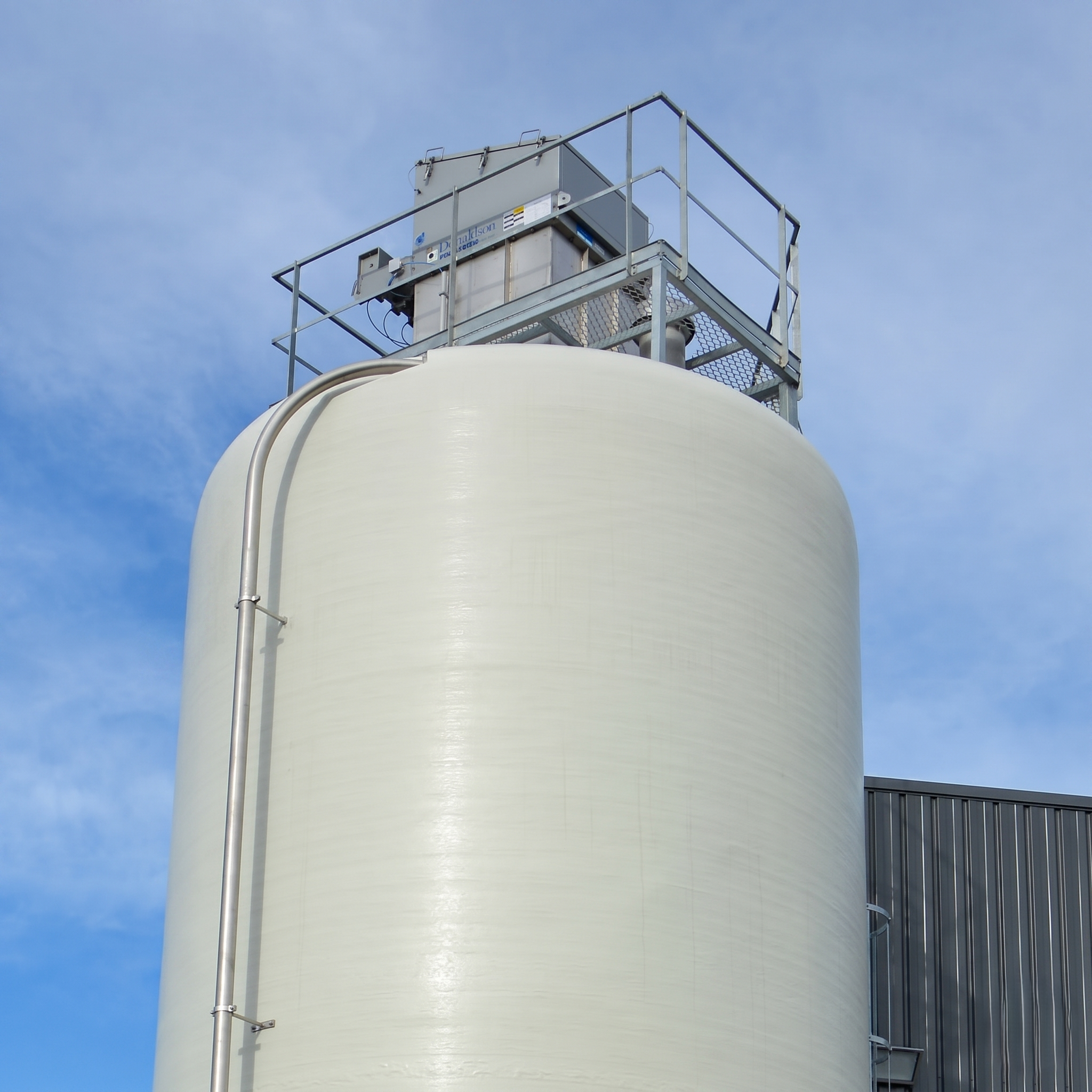
The rigid resin silo is versatile. However, it is not universal; few materials are strictly prohibited. Highly abrasive products can damage the composite walls.
Also avoid powders requiring transfer at very high temperatures. Excessive heat may cause micro-cracks. It can damage the smooth polyester wall.
For chemicals, always check the safety data sheet. This prevents any migration of components into your raw material. A surface treatment or stainless steel is sometimes necessary. Syvrac therefore recommends an audit of the facilities.
At Syvrac, we analyse the safety data sheet (SDS) for your products to verify the chemical compatibility of the resin used, thereby preventing any migration of components into your raw material.
Investing in a silo means committing to a minimum of ten years. Preventive maintenance varies radically depending on the structure chosen.
The rigid silo , often located outdoors, is exposed to the elements but remains structurally sound if inspected regularly. The flexible silo, on the other hand, requires closer monitoring of the condition of its fabric, which is subjected to cycles of tension and relaxation with every filling.
An industrial flexible silo lasts approximately 10 to 15 years. Technical textiles do not tear suddenly. Wear is gradual. It manifests as a loss of fibre porosity.
This can reduce the air evacuation capacity. This solution offers a major advantage: its repairability. Syvrac regularly carries out replacement of flexible silo liners.
This quick operation restores the original performance. You thus retain the supporting metal structure. The flexible silo allows for the cost-effective renewal of its active wall.
Contrary to popular belief, technical textiles do not suddenly ‘crack’. Wear is gradual and manifests as a loss of porosity (clogging of the pores) or excessive stretching of the fibres.
Syvrac offers fabric replacement services that allow for a full 10-year cycle without having to reinvest in the steel frame. This solution is particularly cost-effective for SMEs wishing to spread their capital expenditure.
Rigid silos, meanwhile, can last for over 30 years, provided that regular silo cleaning is carried out to prevent the internal walls from becoming clogged.

Dominique M.
Powder Process Solution Expert
The silo is just one link in the production chain. Its true performance is measured by its ability to feed the lines consistently, without any interruptions in the flow. The interface between the bottom of the cone and the transport system (screw conveyor or pneumatic conveyor) is the critical point of the installation.
In a flexible silo, the natural flexibility of the fabric helps prevent the formation of domes or ‘chimneys’. However, for difficult-to-handle products, the installation of a vibrating bottom or a fluidisation system is often necessary to ensure complete discharge.
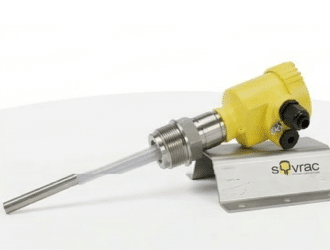
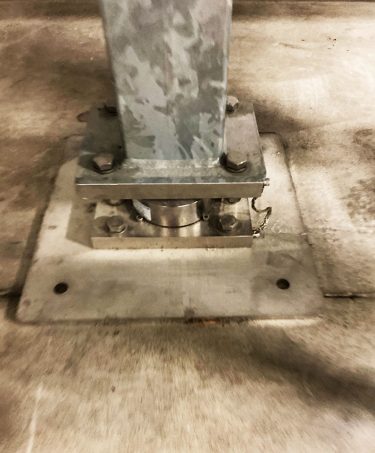
Conversely, the rigid silo, with its non-deformable structure, allows for precise control of load cells and level sensors, a crucial factor for production managers who monitor their stock via a monitoring system.
Maintaining a flexible silo is very straightforward. It is mainly carried out indoors and at ground level. This avoids the need for heavy-duty work at height. Maintenance focuses on dust removal and checking the tension of the fabric.
Vibrations in the wall limit the adhesion of powders. Rigid silos require more intensive monitoring. The seal and internal walls must be checked. External thermal shocks can cause cracks.
Syvrac offers flexible silo cleaning and technical inspection services. These checks guarantee the food safety of your facilities.
The final decision is often made by the finance department, but the purchase cost (CAPEX) should not overshadow the operating costs (OPEX).
The flexible silo is unbeatable in terms of initial investment: less civil engineering work, simplified transport (the fabric is delivered folded) and quick assembly. It is the preferred solution for an artisanal crêperie scaling up to industrial level or for a fine chemicals plant.

The structure affects the quality of perishable goods. This is the case for flour or sugar. A flexible silo allows the product to breathe naturally. Its permeability allows hot air to escape without causing condensation.
This significantly reduces the formation of lumps. The rigid silo provides a completely airtight barrier. It offers perfect protection against external contamination.
However, it requires strict management of air humidity. The ultimate aim is to preserve the product’s flowability. Syvrac can install a vibrating floor or an industrial screen.
| Silo type | Outdoor use | Optimisation of interior space | Anti-condensation | Ease of installation | Hygiene / Cleaning | Extraction of difficult-to-handle products | Cost savings (CAPEX) |
|---|---|---|---|---|---|---|---|
| Flex Silo (Textile) | ✕ |
||||||
| Flex Silo + EasyVrac | ✕ |
||||||
| Resin silo (GRP) | |||||||
| Stainless steel silo | |||||||
| Aluminium silo | ✕ |
SYVRAC provides you with equipment for the storage, transfer and dosing of powdered raw materials.