


Our Fiberglass Silos
The solution for outdoor storage Polyester resin Silos | Fiberglass (GRP)
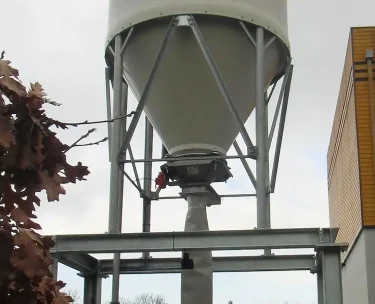
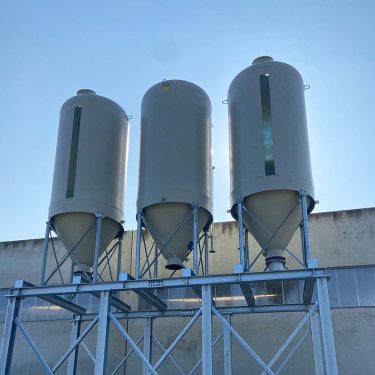
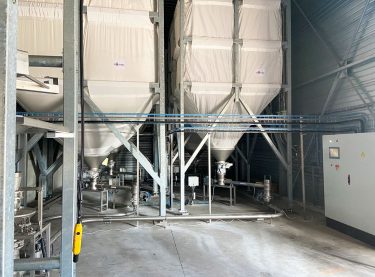
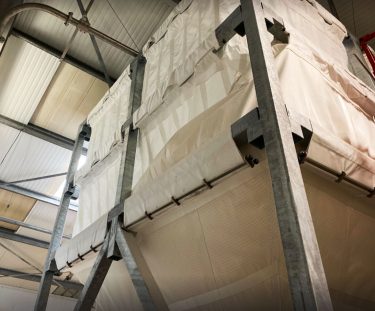
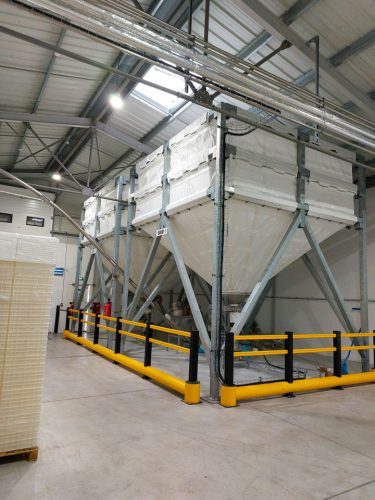
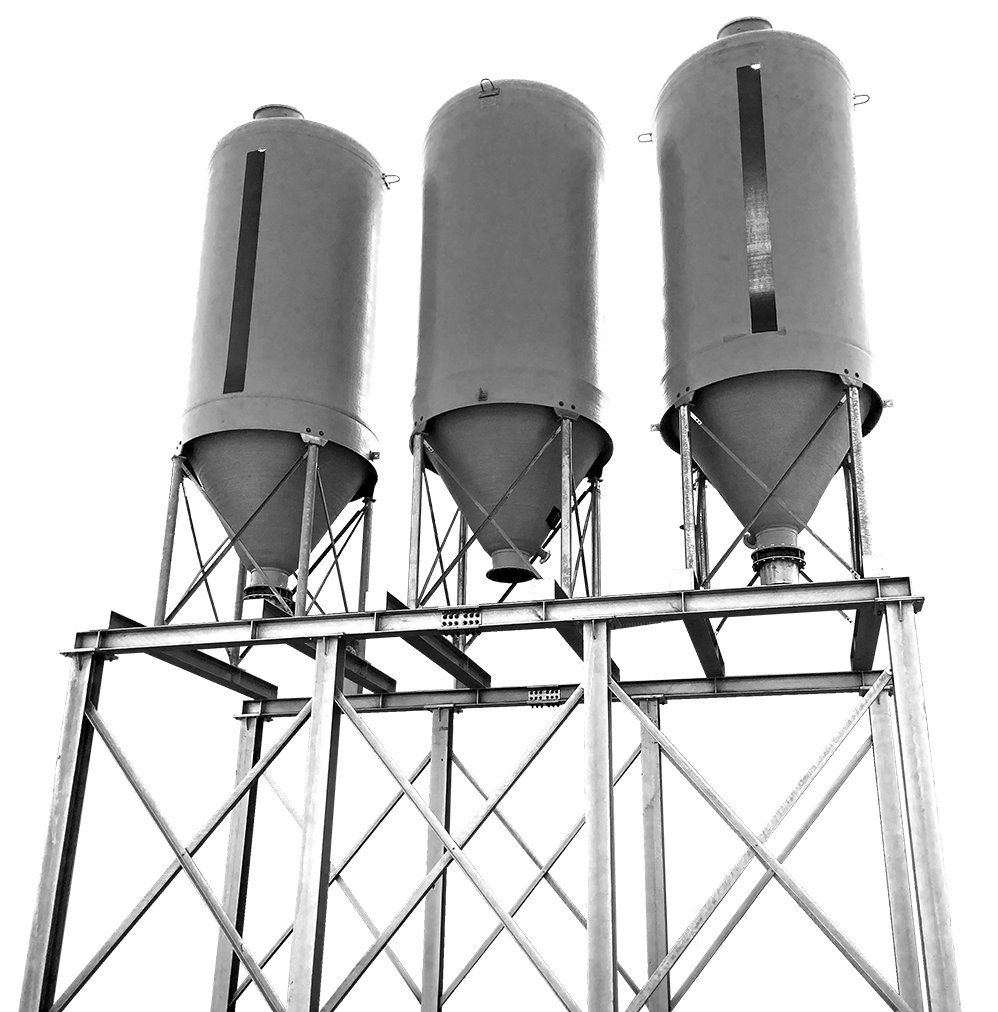
Resin silos designed for industrial use are an effective storage solution, ideal for chemical and food products. These silos offer exceptional chemical resistance and durability, ensuring reliable operation in demanding environments.
Our resins are certified for food contact by the French National Metrology and Testing Laboratory (LNE).
LNE Report No. P237654/0001-V1 – Date of publication 17/06/2024.LNE


Trusted by our clients







The silos are equipped with systems that comply with regulations to ensure their safe use. Particle emissions are controlled by an ATEX-standard filter, where necessary. Stored products are extracted using various systems, such as vibrating bottoms, planetary extractors, rotary extractors or fluidisation devices. We offer a range of silos with capacities ranging from 2 to 110 m³, adapted to different needs.

For agriculture, resin silos can be used to store animal feed, seeds, fertilisers and even hay, meeting the needs of modern farming. These solutions also guarantee excellent chemical resistance, which is essential for storing chemicals.
Compared to stainless steel silos, resin silos are lighter and more economical, while offering equivalent storage performance.
The safety and compliance of the installations are ensured by compliance with LNE and ATEX standards, guaranteeing a compliant installation and reduced maintenance. Rigorous quality controls and safe maintenance devices ensure safety in the storage of chemicals and foodstuffs.
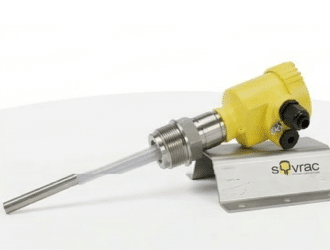
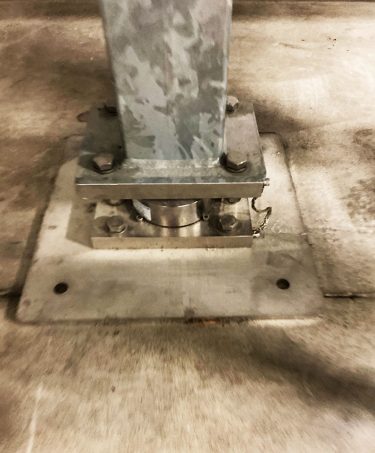
Resin silo technology is based on automatic extraction and predictive maintenance systems, with connected sensors promoting industrial innovation. These advances maximise long-term investment by offering a lightweight, weather-resistant solution.

Orthophthalic resinan economical solution suitable for standard environments
Orthophthalic resin is frequently chosen for applications where environmental constraints are not particularly severe. It offers an excellent compromise between cost and quality, making it the preferred option for projects with limited budgets.
Advantages
- Economical and accessible: It offers good value for money, allowing effective structures to be built without investing in expensive materials.
- Ease of use: Its good workability simplifies the silo manufacturing process while ensuring good material homogeneity.
Limitations
- Moderate resistance: Suitable for standard environments, this resin has lower resistance to corrosion, aggressive chemicals and humidity, which can lead to osmosis.
- Exposure to UV rays and saline atmospheres: In outdoor conditions or in the presence of highly saline air, its longevity may be compromised.
Typical applications
- Storage silos for indoor use or in protected environments.
- Structures used in contexts where chemical attack is rare and the intensity of use remains moderate.
Isophthalic resinthe benchmark for outdoor conditions and demanding environments
Renowned for its robustness, isophthalic resin appears to be the best solution in environments where external and chemical conditions require increased protection.
Advantages
- Excellent UV and corrosion resistance: Its formulation provides excellent resistance to ultraviolet rays, osmosis and chemical attack.
- Increased durability: Its long-term mechanical resistance makes it a reliable material for structures exposed to the elements.
Limitations
- Higher cost: Its superior quality means a higher initial investment compared to orthophthalic resin.
Typical applications
- Outdoor storage systems, particularly for food products and fertilisers.
- Silos exposed to harsh weather conditions or high humidity, requiring enhanced robustness.
Vinylester resinexcellence in terms of chemical resistance
Vinylester resin, which combines the advantages of polyester and epoxy resins, stands out for its remarkable resistance to the most aggressive environments. It is particularly suitable when conditions of use require high chemical and mechanical performance.
Advantages
- Superior chemical resistance: Capable of effectively resisting the action of acids, solvents and strong bases, it is ideal for specific industrial applications.
- Excellent adhesion and flexibility: These characteristics allow the resin to adapt to mechanical and thermal stresses, while limiting the appearance of cracks.
Limitations
- Higher investment: This resin is generally more expensive, and its use may be considered excessive for conventional applications.
Typical applications
- Storage of highly aggressive or toxic chemicals requiring a robust protective barrier.
- Installations in areas with high temperatures or high humidity, such as in the chemical industry or water treatment.
Conclusion
The choice of resin for manufacturing a storage silo must be considered in light of the specific constraints of the project:
- Orthophthalic resin: Perfect for standard environments and low-cost projects.
- Isophthalic resin: Better suited to outdoor conditions and applications involving moderate chemical constraints.
- Vinyl ester resin: Ideal for the most demanding situations where chemical and mechanical resistance must be optimised.
It is essential to carry out a thorough analysis of requirements and constraints before embarking on the design of a silo. Calling on a specialist allows you to validate technical choices and optimise the long-term performance and durability of the structure.

Let's build together your storage solution
Stéphane B.
Powder processing solution expert
Advice from Our Experts
SYVRAC provides equipment for the storage, transfer, and dosing of powdered raw materials.




Resin silos: a technically and economically advantageous choice
Make the right choice! SYVRAC helps you choose between resin silos and stainless steel silos, depending on your specific needs. Resin silos are used in industry, particularly for the storage of aggressive chemicals thanks to their corrosion resistance, ensuring durability and safety.
In the food industry, they offer a hygienic solution for foodstuffs, facilitating cleaning and preventing contamination. In agriculture, they are the ideal solution for storing fertilisers, seeds and animal feed, combining lightness and durability to meet the needs of farms.
Are resin silos suitable for chemicals?
Yes, resin silos are particularly suitable for storing chemicals, thanks in particular to their excellent corrosion resistance.
Which resin should you choose for a storage silo?
Comparison of resins for storage silos
When manufacturing a composite storage silo, the choice of resin is crucial to ensuring the durability, chemical resistance and overall performance of the structure. Several criteria come into play, including the nature of the product being stored, environmental conditions and the budget allocated to the project. Here is a detailed analysis of the three main families of resins often used in this field: orthophthalic, isophthalic and vinyl ester.