Complete guide to choosing the best silo for flour storage
Canvas silos, stainless steel silos, resin silos, flexible silos: How to choose the right flour silo?
Choosing the right silo for storing flour is important in the bakery, pastry, confectionery (BVP) and biscuit industries. Whether you store white flour, wholemeal flour, organic flour or specific flours such as buckwheat or rice, each type of silo has its advantages and limitations. This guide will help you make the choice that best suits your needs by discussing the selection criteria, the different types of silos, best practices for storage and the associated costs.
Criteria for choosing a flour silo
Storage capacity
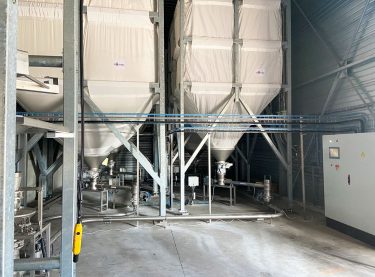
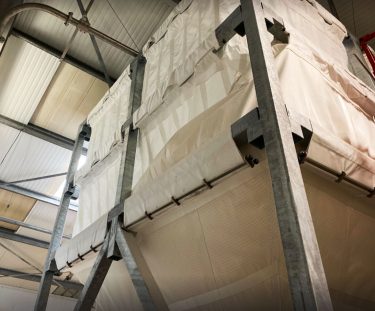
- Small volumes: Flexible or canvas silos are ideal for small structures with limited needs. They are easy to install and transport, perfect for confined spaces.
- Medium volumes: Resin silos offer a suitable solution for intermediate capacities. They are customisable and chemically resistant, although their lifespan is limited.
- Large volumes: Stainless steel silos are often the best option for high capacities. They comply with strict health standards and allow for thorough cleaning, which is essential for large food companies.
Materials and durability
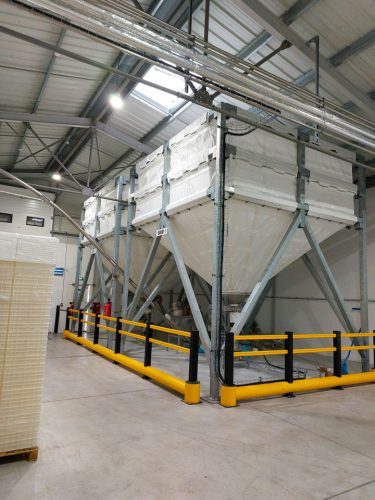
- Flexible silos: Made from resistant technical textiles, they are economical and easy to install. However, they are sensitive to climatic variations and have a shorter lifespan than rigid materials.
- Stainless steel silos: Resistant to corrosion and chemicals, they are ideal for storing organic or gluten-free flours. Their high cost and complex installation are their main drawbacks.
- Aluminium silos: Lightweight and easily transportable, they offer good corrosion resistance. However, they are less suitable for heavy loads and very demanding environments.
- Resin silos: Available in different types (orthophthalic, isophthalic, vinyl ester), they are customisable but sensitive to mechanical shocks.
Features and innovations
- Ventilation systems: Essential for protecting flour from moisture, they ensure optimal preservation.
- Extraction systems: Screw conveyors are ideal for continuous flow, while pneumatic systems are suitable for automated installations. Vibrating feeders are perfect for flours that are difficult to flow.
- Innovations: The Easyvrac® system for flexible silos facilitates maintenance and cleaning, thus optimising the hygiene of the installations.
Let's Build Your Storage Solution Together
Dominique M.
Powder Process Solution Expert
Types of silos and their advantages
- Round silos: Offer better load distribution and are easier to clean. They are often used for large storage capacities.
- Rectangular silos: Optimise floor space and are suitable for environments where space is limited. They can be more difficult to clean due to the angles.
- Modular silos: Allow flexible adaptation to changing storage needs. They can be expanded or reduced as required.
Best practices for flour storage
- Ideal storage conditions: Flour must be protected from moisture and contamination. A dry, well-ventilated environment is crucial.
- Hygiene standards: Compliance with HACCP standards ensures food safety. Stainless steel silos, with their smooth, watertight surfaces, are particularly suitable.
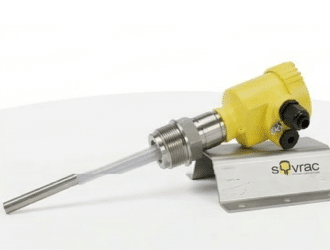
- Moisture management: Using sensors to monitor internal conditions prevents mould and ensures consistent flour quality.
Costs associated with the purchase and maintenance of silos
- Purchase and installation costs: These vary depending on the type of silo and capacity. Stainless steel silos are the most expensive, but offer superior durability and compliance with health standards.
- Maintenance costs: It is essential to budget for regular maintenance. Systems equipped with effective cleaning technologies can reduce these costs in the long term.
- Optimisation solutions: Choosing silos that are suited to your specific needs and equipped with efficient ventilation and extraction systems will help to optimise costs.
Questions to ask yourself
- How much flour do you need to store? Assess your capacity requirements to choose the right silo. An accurate estimate will prevent you from oversizing or undersizing.
- What are the ideal storage conditions? Consider the available space, ceiling height, and access door dimensions to choose the appropriate type of silo.
- What are the maintenance costs? Take into account maintenance and cleaning costs to ensure the durability and hygiene of your silo.
- What certifications or safety standards must be met? Ensure that the silo you choose complies with the regulations in force in your sector, in particular HACCP standards for food safety.
Conclusion
Choosing the right silo depends on your specific needs in terms of capacity, materials and features. By following this detailed guide and asking yourself the right questions, you will be able to make an informed choice.
Advice from our experts
SYVRAC provides you with equipment for the storage, transfer and dosing of powdered raw materials.