

Fabric replacement without dismantling the frame
In a context where efficiency and sustainability have become priorities for the electronics industry, a major player in eastern France is innovating by transforming its ESD plastics handling processes. Thanks to the installation of an industrial marquee and automated silos, the company is reducing material losses and improving resource management, while minimising its environmental impact. Discover how this pioneering solution reinforces the company’s ecological and operational commitment, while optimising employee comfort and safety.
The customer’s challenge
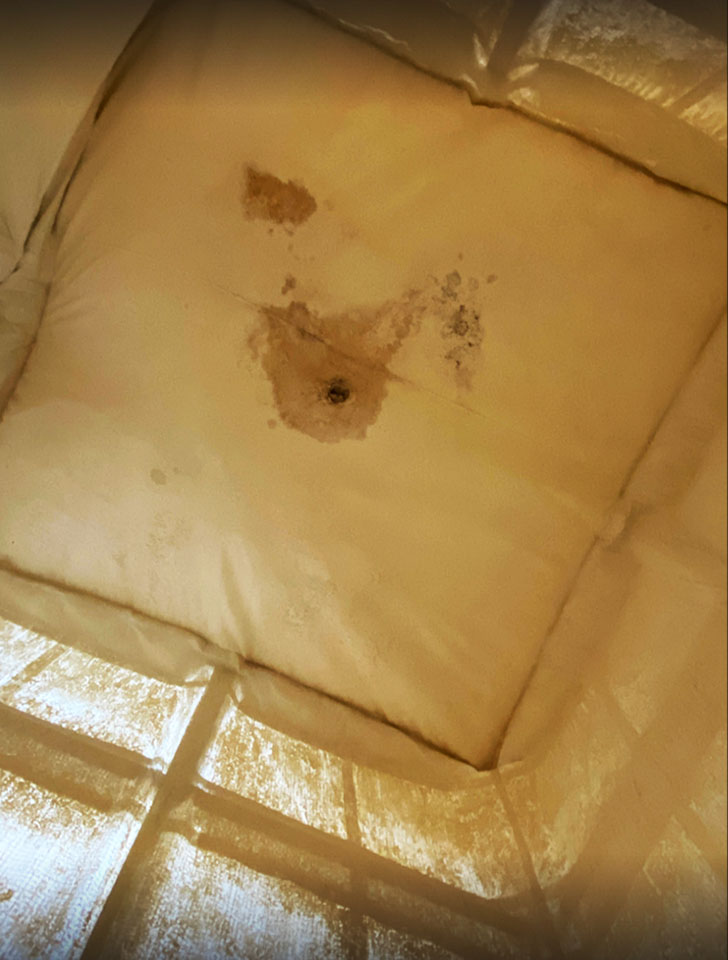
The main objective is to replace the damaged filter cloth without dismantling the silo structure. To do this, it is crucial to minimise intervention time in order to reduce the impact on production activity. It is also essential to preserve the structural integrity of the silo, ensure the safety of workers and facilities, and maintain the quality of the finished products.
The SYVRAC proposal
To achieve these objectives, several solutions are being considered: the use of innovative repair techniques allowing easy access to the filter cloth, careful planning of interventions to optimise time and resources, and the implementation of temporary measures to ensure continuity of production during the work.
The expected results include efficient and rapid replacement of the filter cloth, minimal reduction in production during the intervention, and a return to normal and safe production as quickly as possible.
The handling solution provided by Syvrac
A technical challenge overcome thanks to the patented Easyvrac® system
Faced with this situation, there were two challenges: replacing the damaged fabric without dismantling the silo structure and minimising downtime as much as possible. Our patented Easyvrac® solution enabled us to intervene quickly and efficiently.
In just six hours and with a team of two technicians, the new fabric was installed directly onto the existing structure. This method significantly reduced downtime and costs while minimising operational constraints.
To overcome access difficulties, given the combined weight of the new and old tarpaulins, we opted to use a cherry picker. The layout of the site, which included equipment such as transfer screws, a sieve and a big bag emptier, made the use of cherry pickers more complex than during the initial installation.
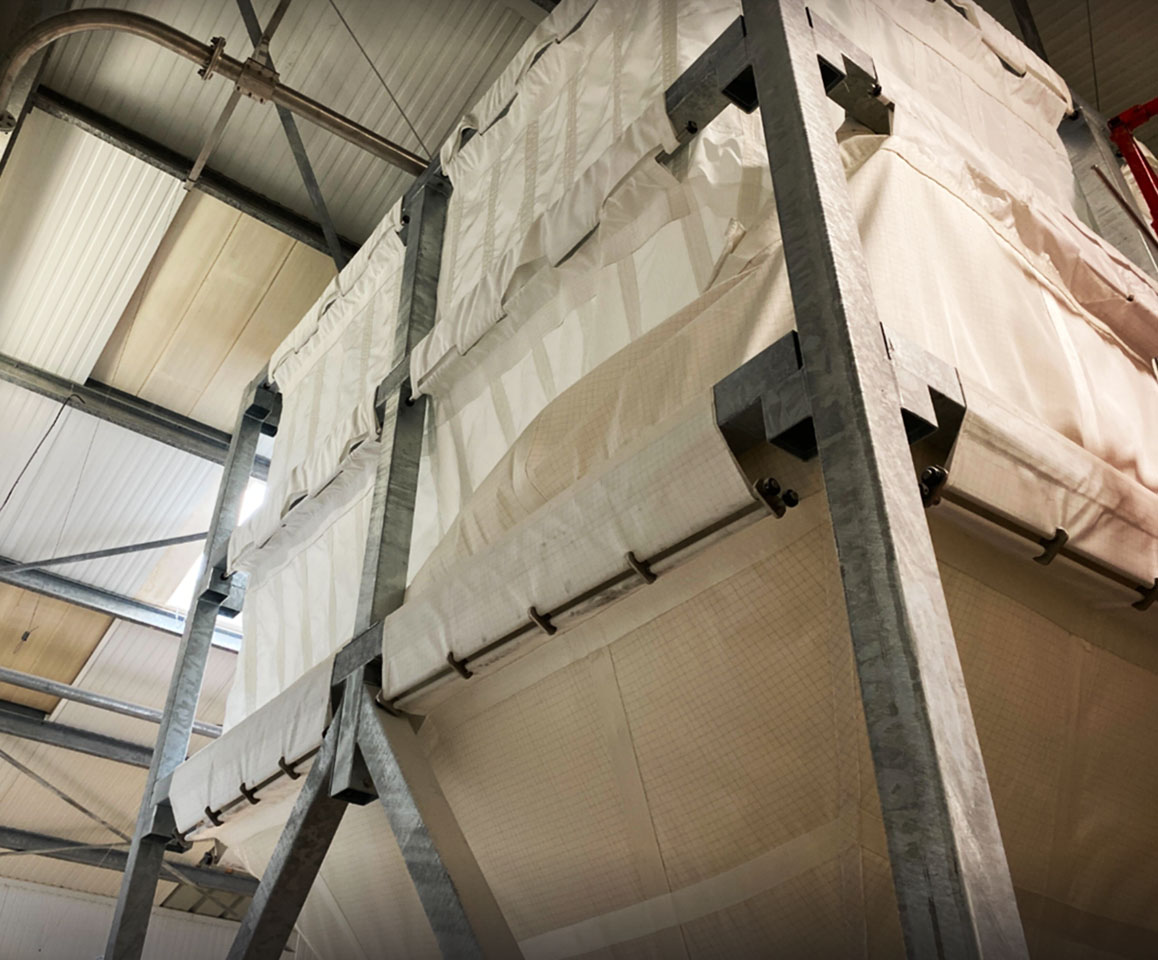
We positioned the new fabric over the old one, then gradually unfastened the damaged fabric. At each level of the structure, the loops of the new fabric were stapled in turn. Thanks to this methodical approach, the fabric was successfully replaced, ensuring an immediate and sustainable resumption of activity.
Easyvrac® continues to impress
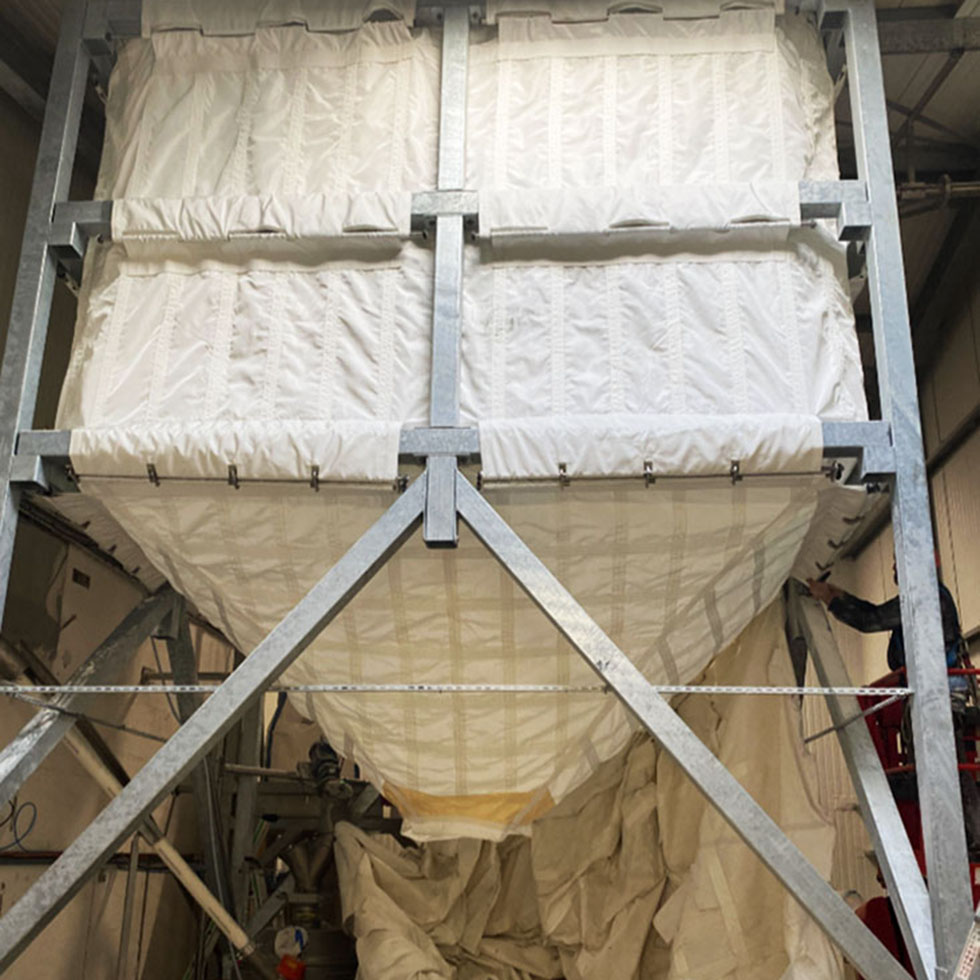
Easyvrac® tarpaulins are made from antistatic polyester fabric and reinforced with sturdy seams to withstand harsh conditions. The design of this innovative product allows for quick assembly and disassembly without having to remove the existing frame. The attachment points are doubled at the first level of attachment of the tarpaulin to the frame, where no less than 60% of the total load is concentrated.
The advantages of the Syvrac solution
In addition to the benefits of Easyvrac®, the Syvrac solution includes:
- A decompression filter to facilitate pneumatic loading.
- An unloading network that allows silos to be loaded from the dock using a pneumatic truck, ensuring speed and efficiency. A pressure sensor limits the unloading pressure to 0.8 bar and a light cylinder with audible alarm alerts the driver if the pressure setting is exceeded.
- Reinforced attachment points distribute loads and ensure increased durability.
- An integral weighing system, based on four 20-tonne sensors, to control deliveries and monitor stock levels in real time.
Effective intervention for optimised production
Following our intervention, our client was able to quickly restore the use of its silo, thereby limiting production downtime. This project perfectly reflects Syvrac’s ability to offer tailored solutions to environmental and industrial constraints, optimising performance and costs.
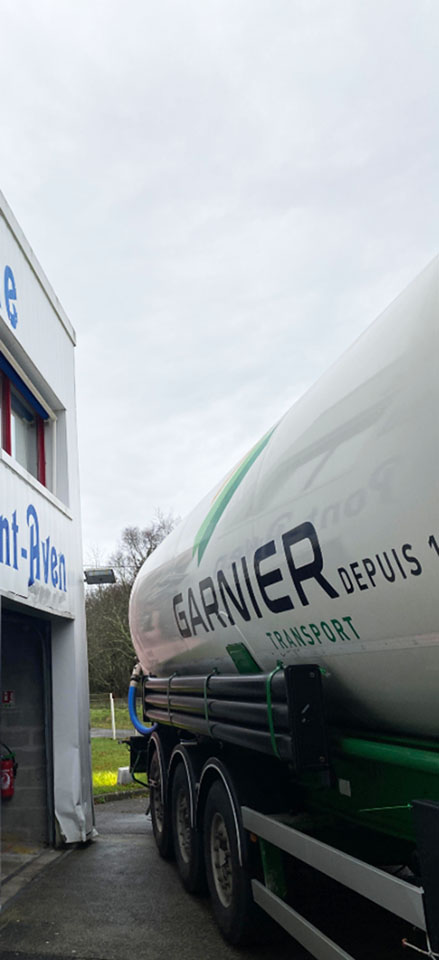
Unloading network with pneumatic lorry on the platform
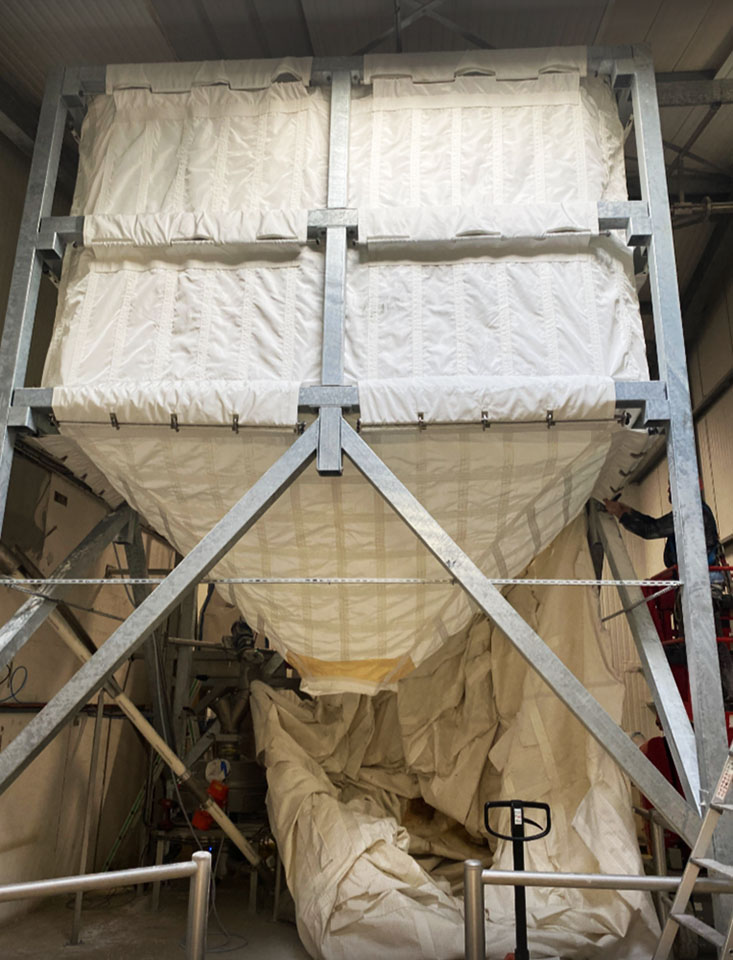
Repair of the filter cloth without dismantling the silo
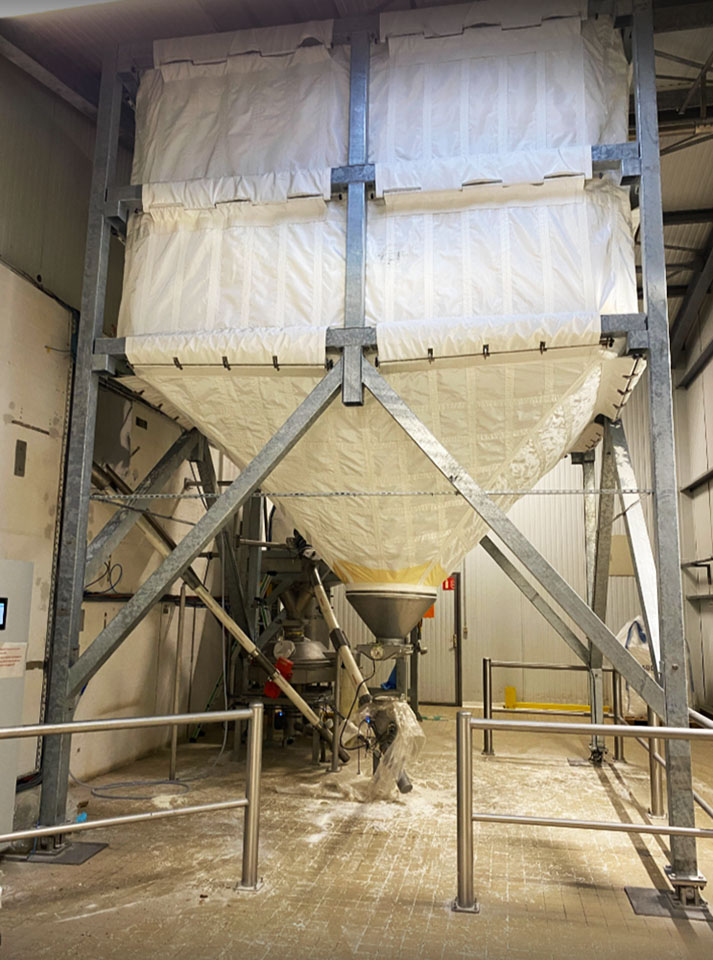
Repair and restart of the silo after a storm
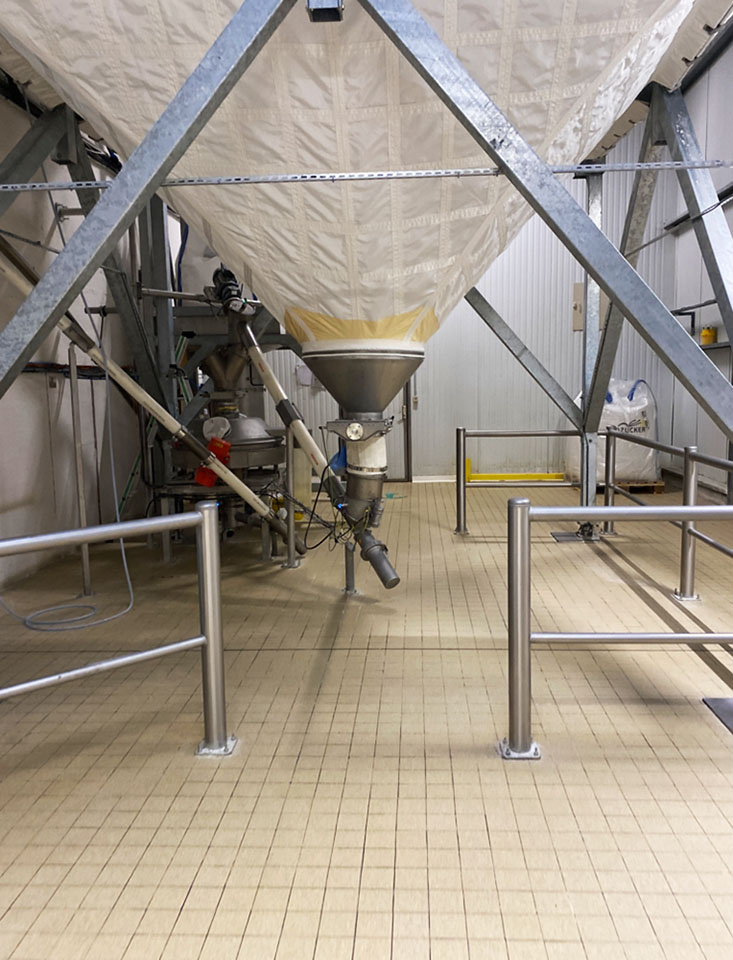
New canvas installed directly onto the existing structure
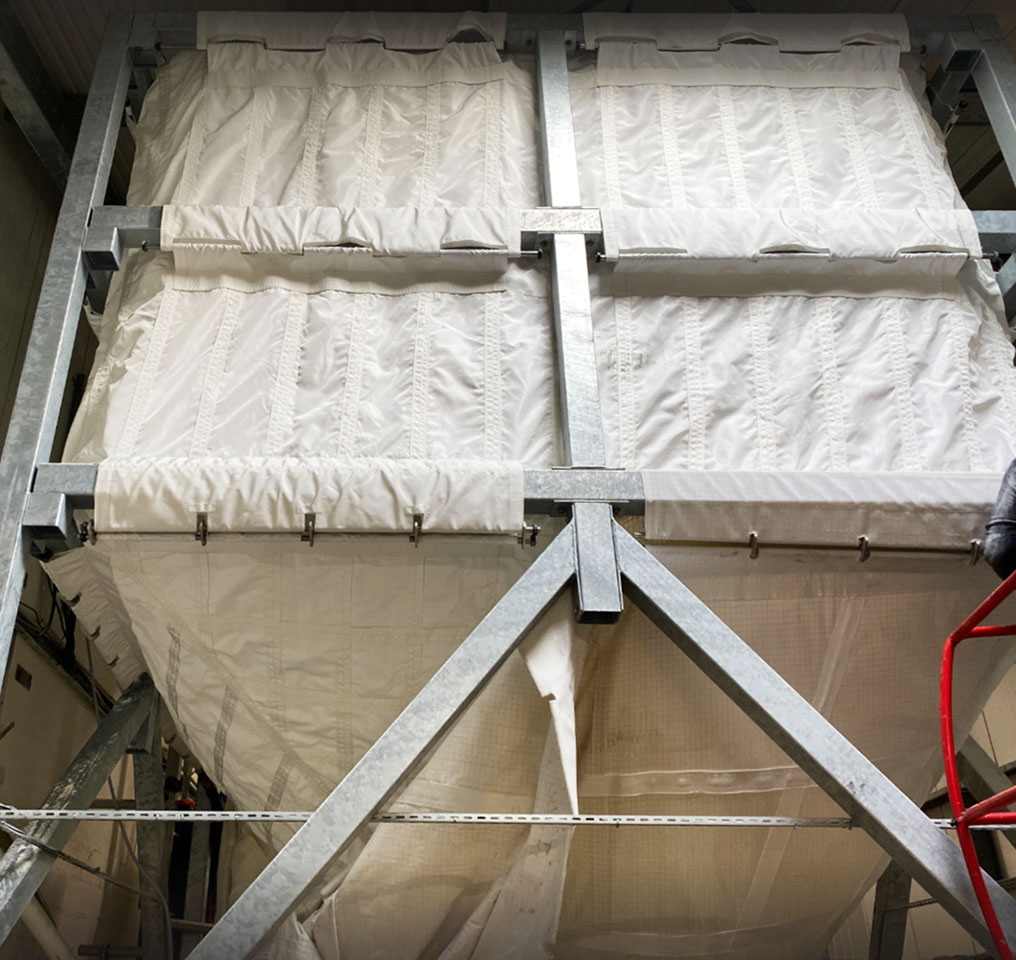
Reinforced seams on flexible silo fabric ensure durability.
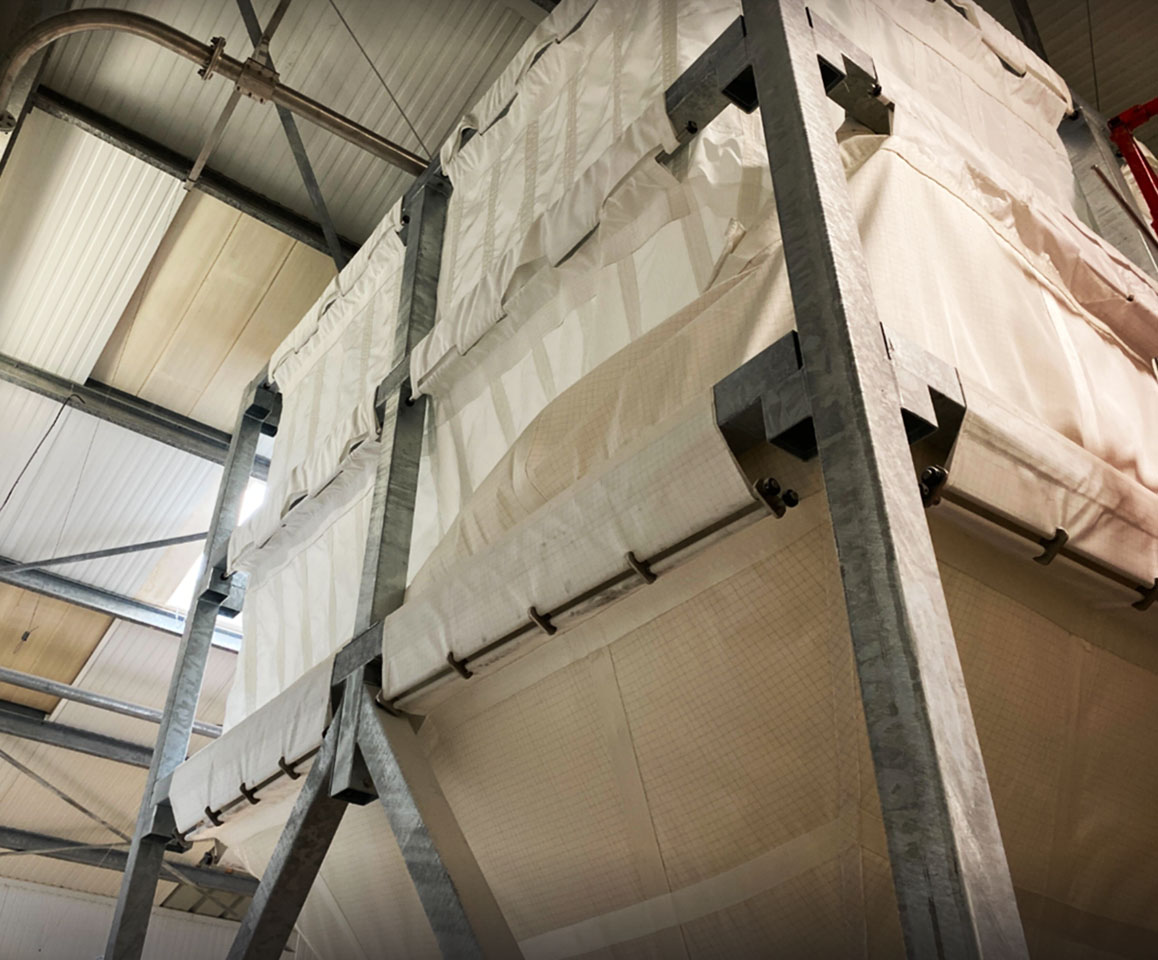
Reinforced attachment points for load distribution
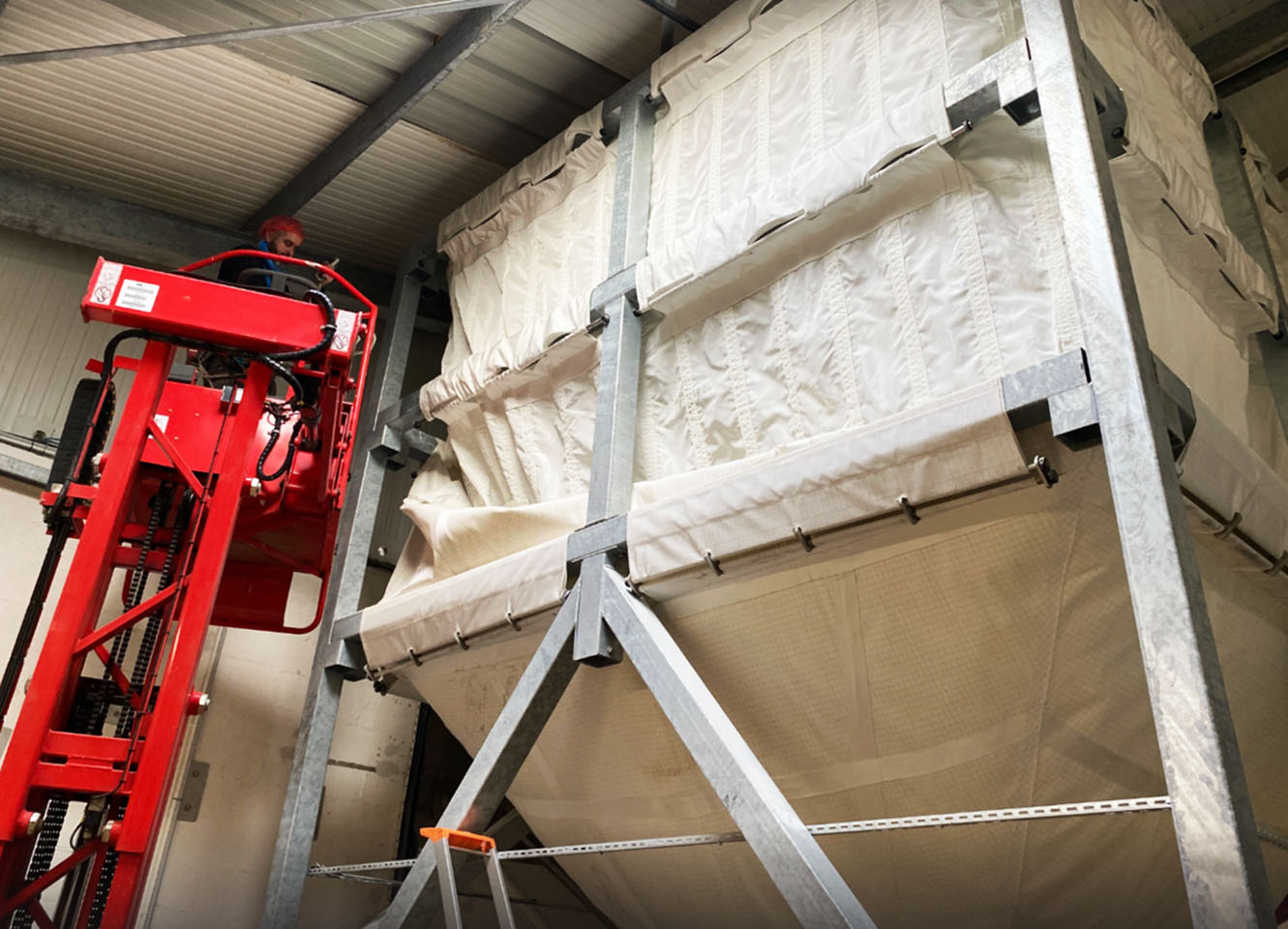
Syvrac silo solutions for optimising costs
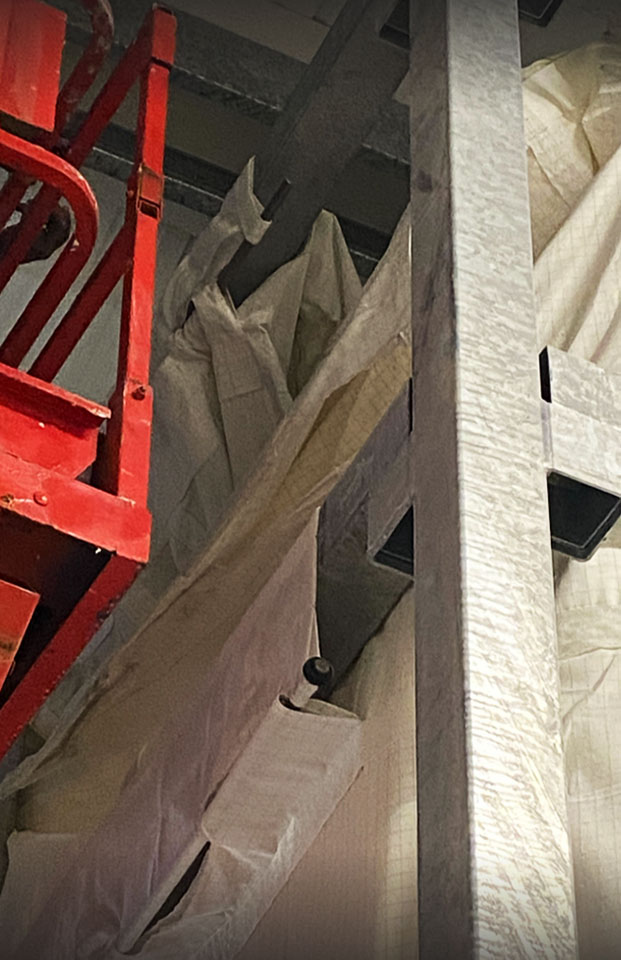
Intervention on the flexible textile silo
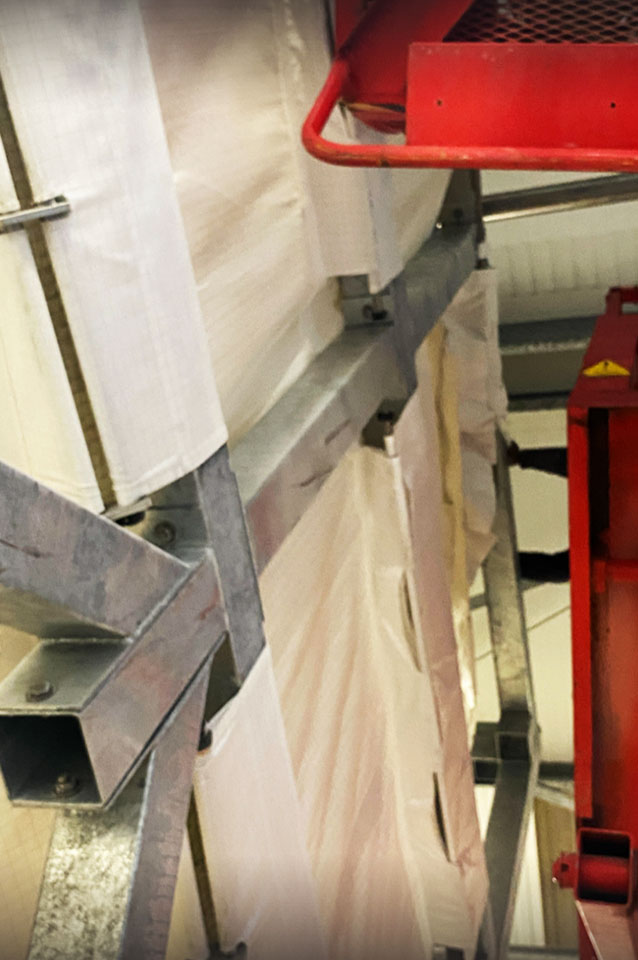
Quick installation of Easyvrac® fabric without removing the frame