

Bicarbonate storage on board ship
The oldest shipping company in Marseille, a historic pillar of maritime transport between the mainland and Corsica, has recently undertaken an innovative environmental initiative. With two daily crossings between the port of Marseille and the Corsican coast, this iconic company is committed to significantly reducing its environmental footprint. To this end, it has equipped one of its ships with a particulate filter, a cutting-edge technology that significantly reduces pollutant emissions. By integrating this system on board, the Marseille-based shipping company has become the first in the world to adopt such an innovation, representing a turning point in the maritime industry in terms of environmental protection.
The customer’s challenge
In order to guarantee the effectiveness of the particle filtration system, it was necessary to store a sufficient quantity of sodium bicarbonate in the ship’s holds. This storage presented several specific constraints.
- Access to the installation site was particularly restricted, ruling out the use of aerial platforms, as the silos had to be installed in narrow passageways.
- The frames had to be designed to withstand the ship’s movements, such as heeling, while taking into account the characteristics of bicarbonate (bulk density of 0.97 g/L and tapped density of 1.15 g/L).
- The silo liners had to be easy to install after the structures were in place, due to the limited space available.
- A filtration system and declogging system had to be integrated into the roof of the silos to allow decompression during pneumatic loading.
Preamble to the use of bicarbonate in a maritime context
Sodium bicarbonate is recognised for its effectiveness in the treatment of exhaust fumes. It acts as an alkaline reagent, neutralising acidic gases such as sulphur dioxide (SO₂ (HCl). This solution, which is particularly well suited to the maritime context, complies with increasingly stringent environmental regulations, thereby reducing the ecological impact of ships.
The customised solution proposed by Syvrac
Details of the proposed solution
The four customised silos
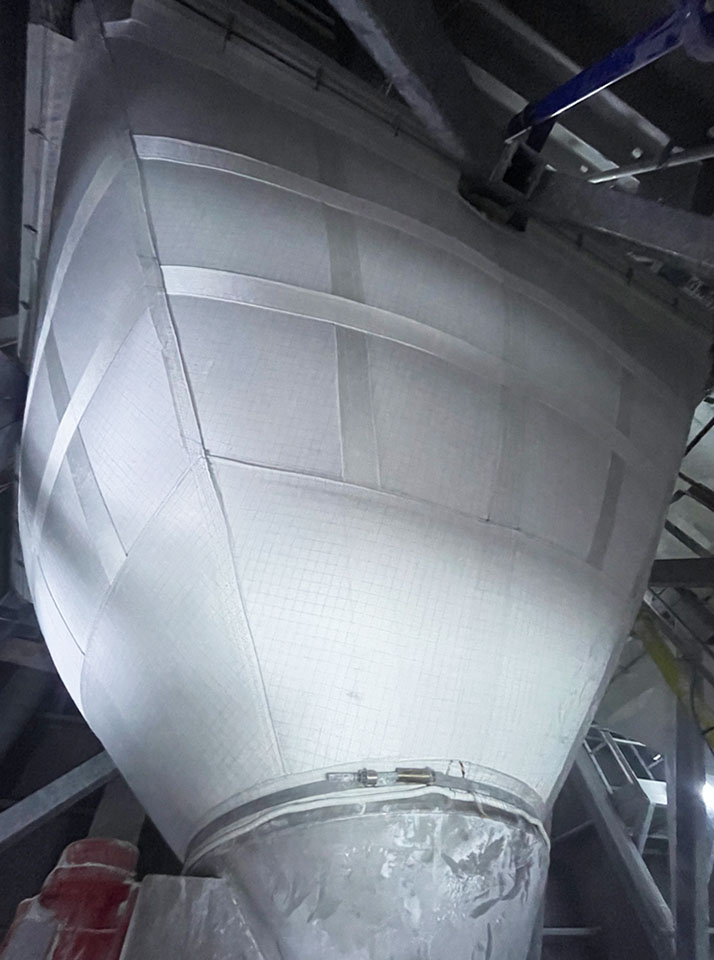
The silos, each with an individual capacity of 30 m³, were specially designed to meet the customer’s needs. Measuring 3,360 mm x 3,360 mm with a height of 7,440 mm, they can hold a maximum load ranging from 29 to 34 tonnes, depending on the filling rate and settling of the bicarbonate during loading.
The silos are made of hot-dip galvanised steel, ensuring effective protection against rust, which is essential in a maritime environment. The metal frame combines 120 mm x 120 mm square tubes and 100 IPN profiles. This structure offers optimal stability against the ship’s movements during crossings.
Silo tarpaulins and the patented Easyvrac® system
Faced with space constraints, Syvrac deployed its patented Easyvrac® system for the first time, which allows the tarpaulins to be quickly assembled and disassembled without having to dismantle the frame. This solution proved particularly effective in the confined conditions of the ship’s passageways.
The tarpaulins resistant and antistatic are made from polyester fabric. They are reinforced with horizontal and vertical seams, ensuring their durability. To facilitate pneumatic loading by lorry, the roof of the silos is equipped with a decompression filter.
The fabric attachment points are doubled at the bottom of the silos, where 60% of the total load is concentrated, while the stress gradually decreases as you move upwards.
The optimised unloading system
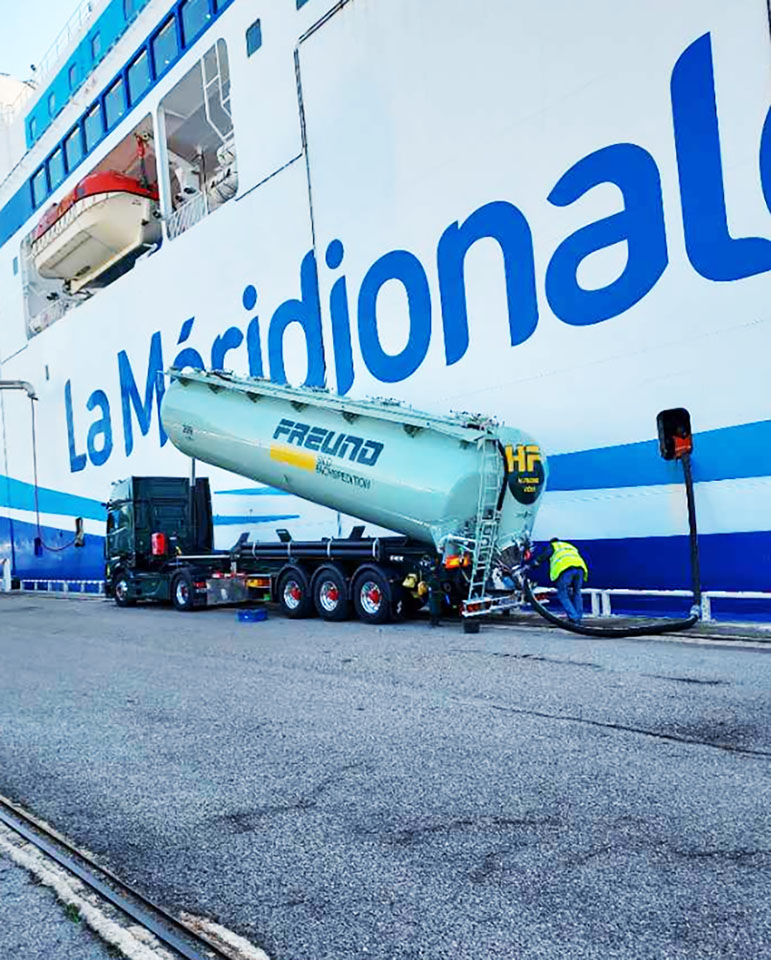
From the loading bay, a pneumatic truck loads the silos. The automatic valve switching system directs the bicarbonate to the designated silo. The process is efficient and secure.
A remarkable maritime innovation
The installation of these storage silos in a ship is a world first. It demonstrates Syvrac’s expertise in adapting its solutions to complex environments. Through its Easyvrac® system, Syvrac responds to the space constraints of the ship and demonstrates the robustness of its solutions, which can withstand the demanding conditions of a maritime environment.
Syvrac’s design office played a key role in accurately modelling the installation environment. This methodical approach enabled optimal integration of the silos and ensured the safety and efficiency of the system.
By installing this facility, the Marseille-based shipping company has reinforced its environmental commitment and also set a milestone in the maritime transport industry. This project illustrates how innovative technical solutions, proposed by Syvrac, meet the highest ecological and operational requirements.
Unloading the bicarbonate tank
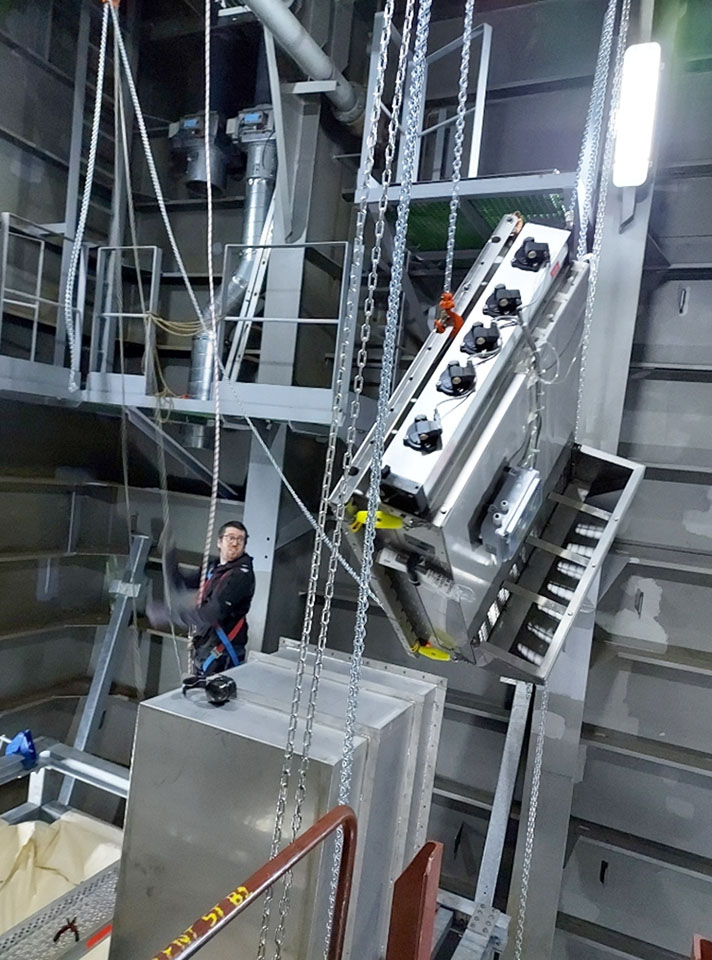
Lowering-equipment-into-the-ship
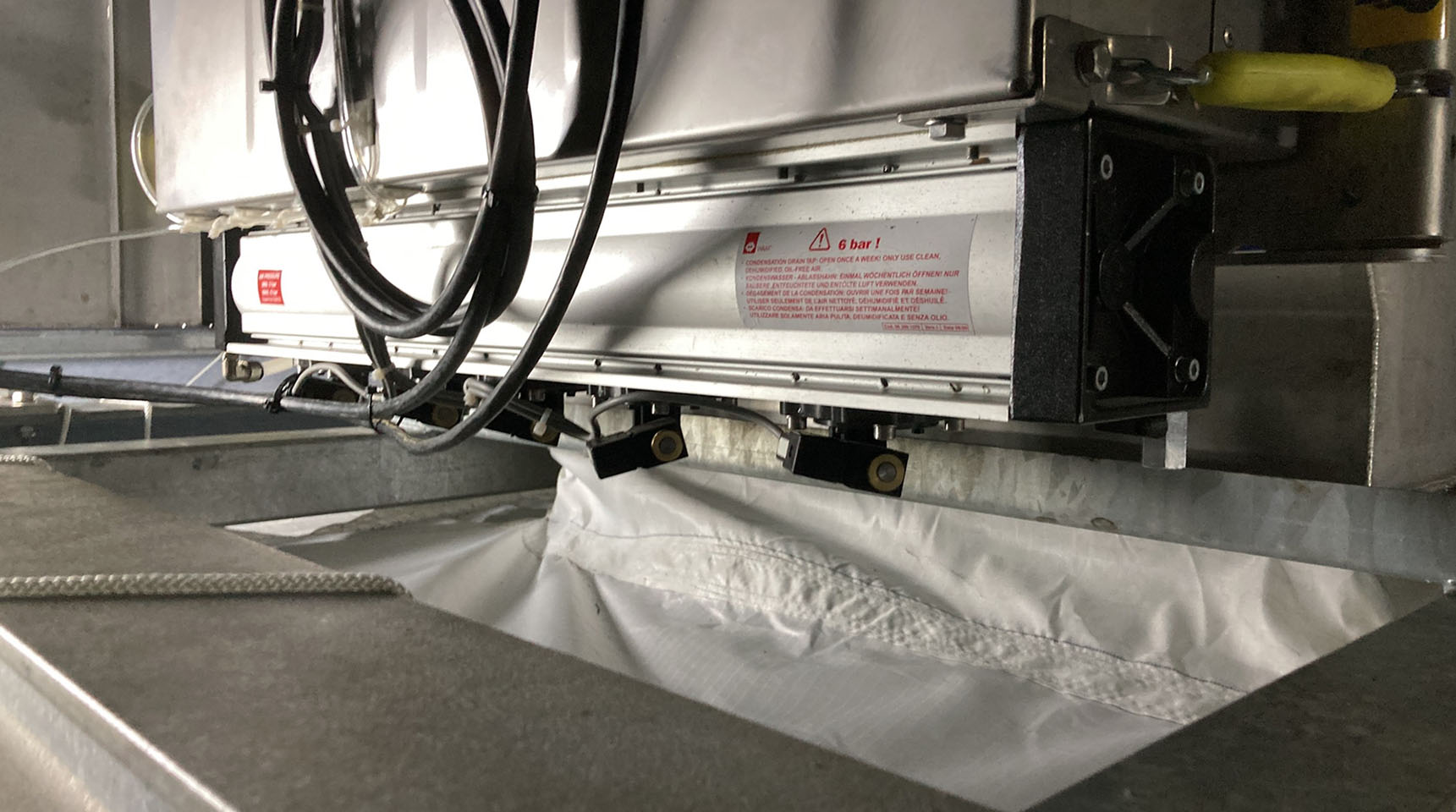
Detail of the bicarbonate storage facility
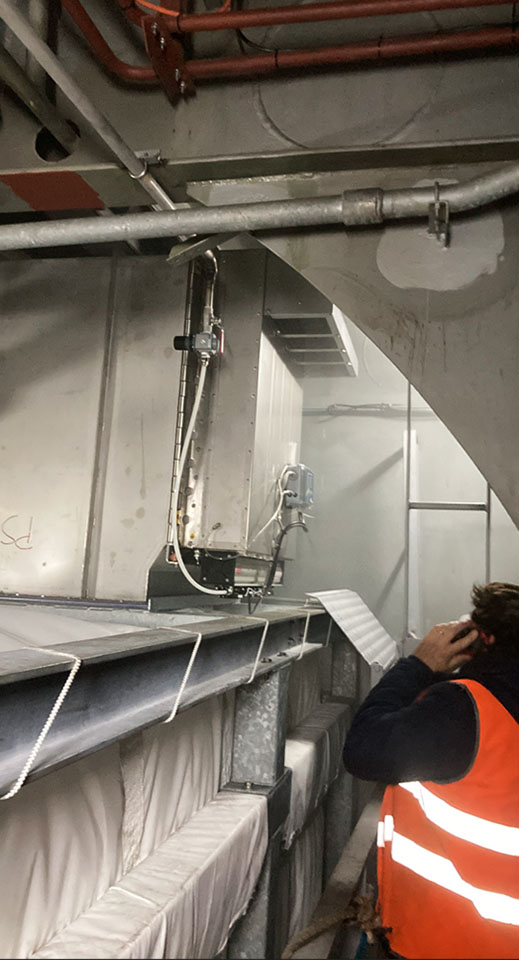
Installation of the flexible silo in the vessel
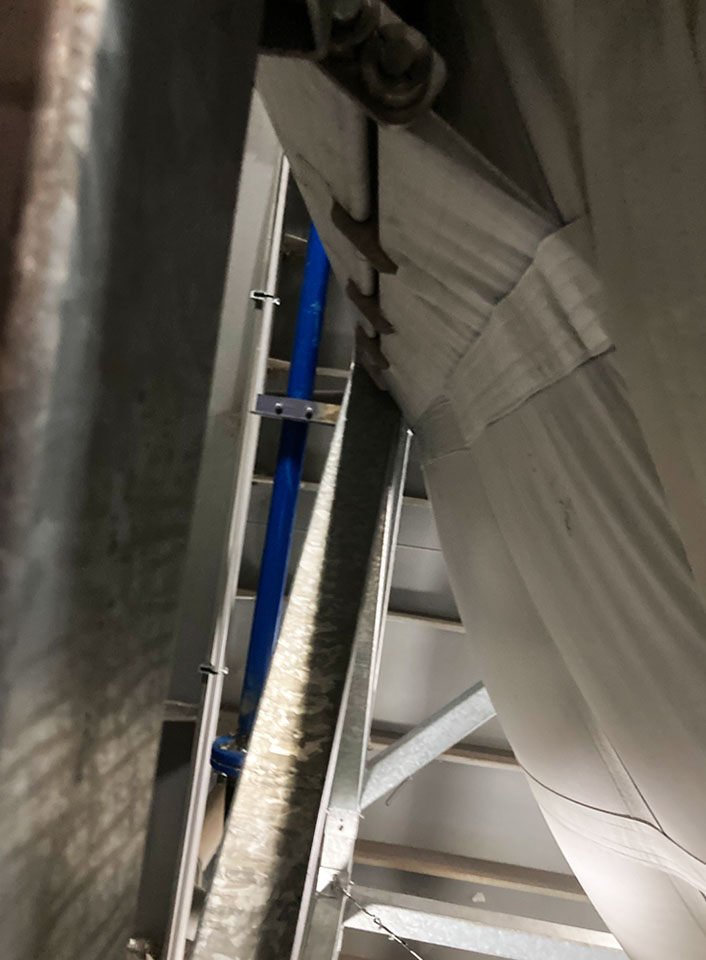
Flexible silo on metal structure
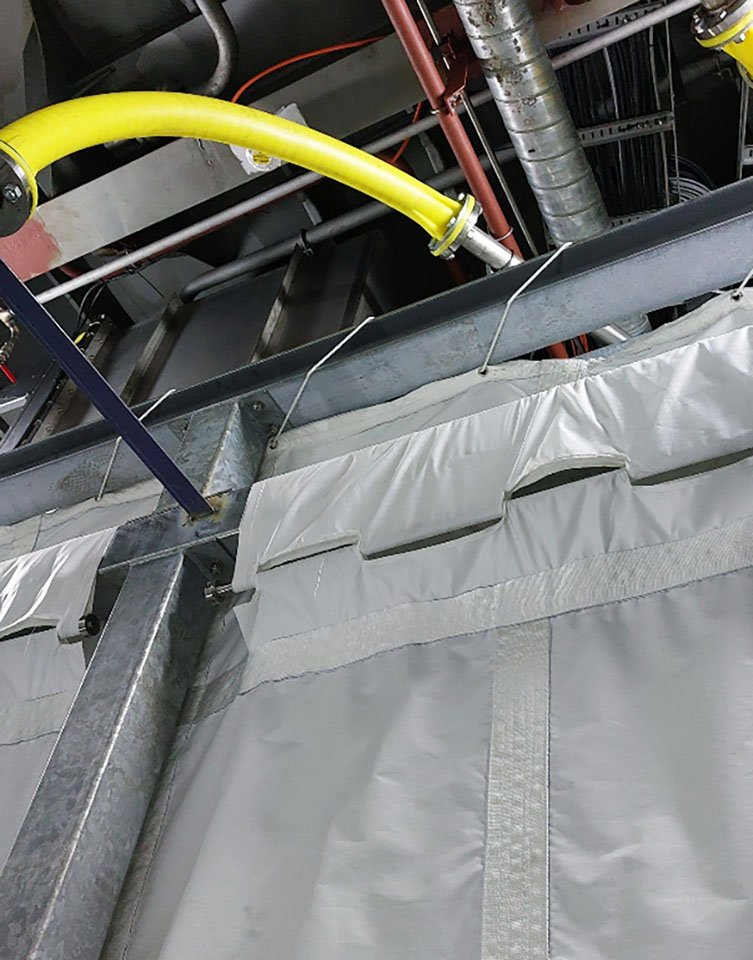
Transfer of bicarbonate to the flexible silo
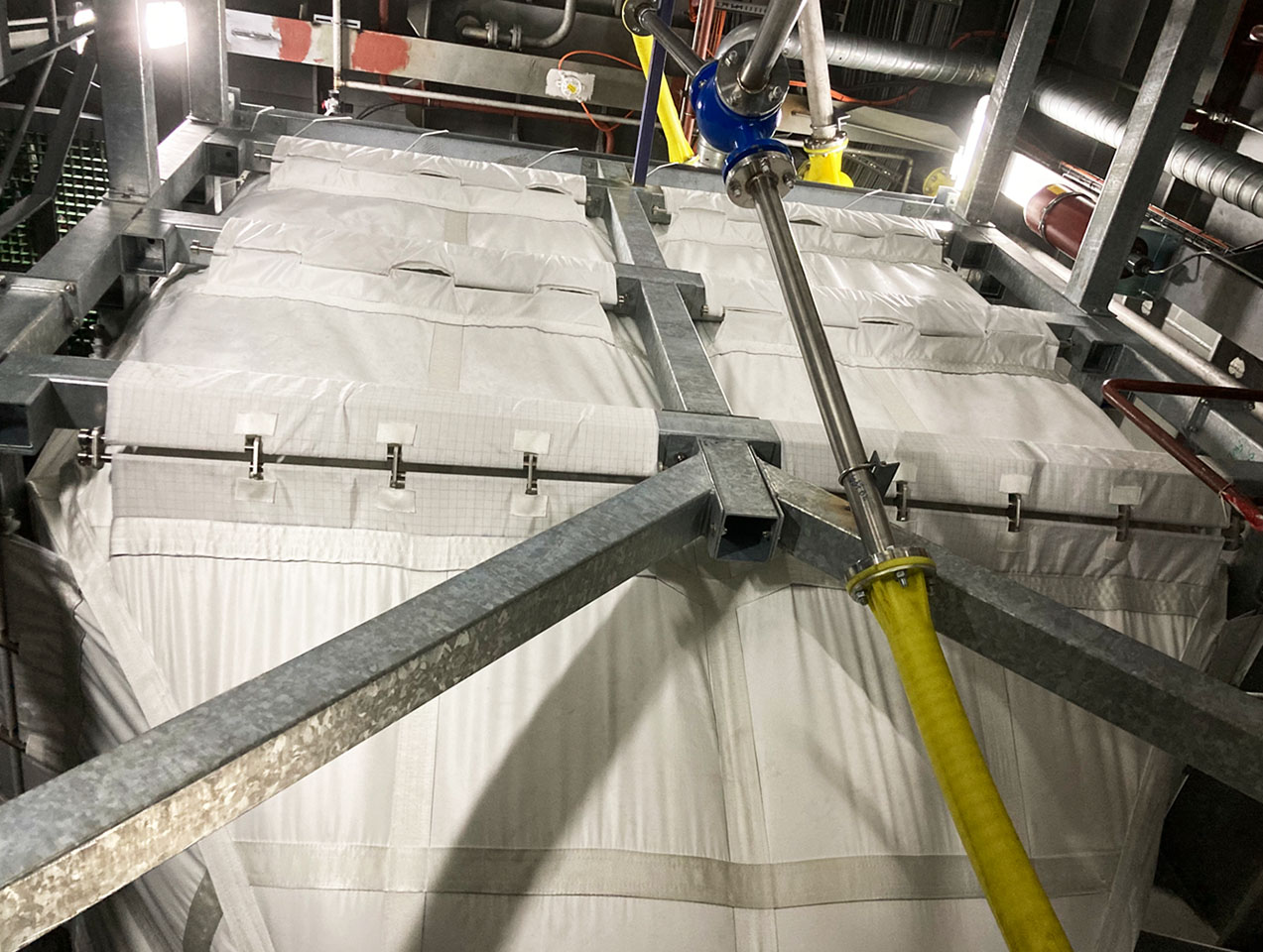
Flexible silo and transfer screw
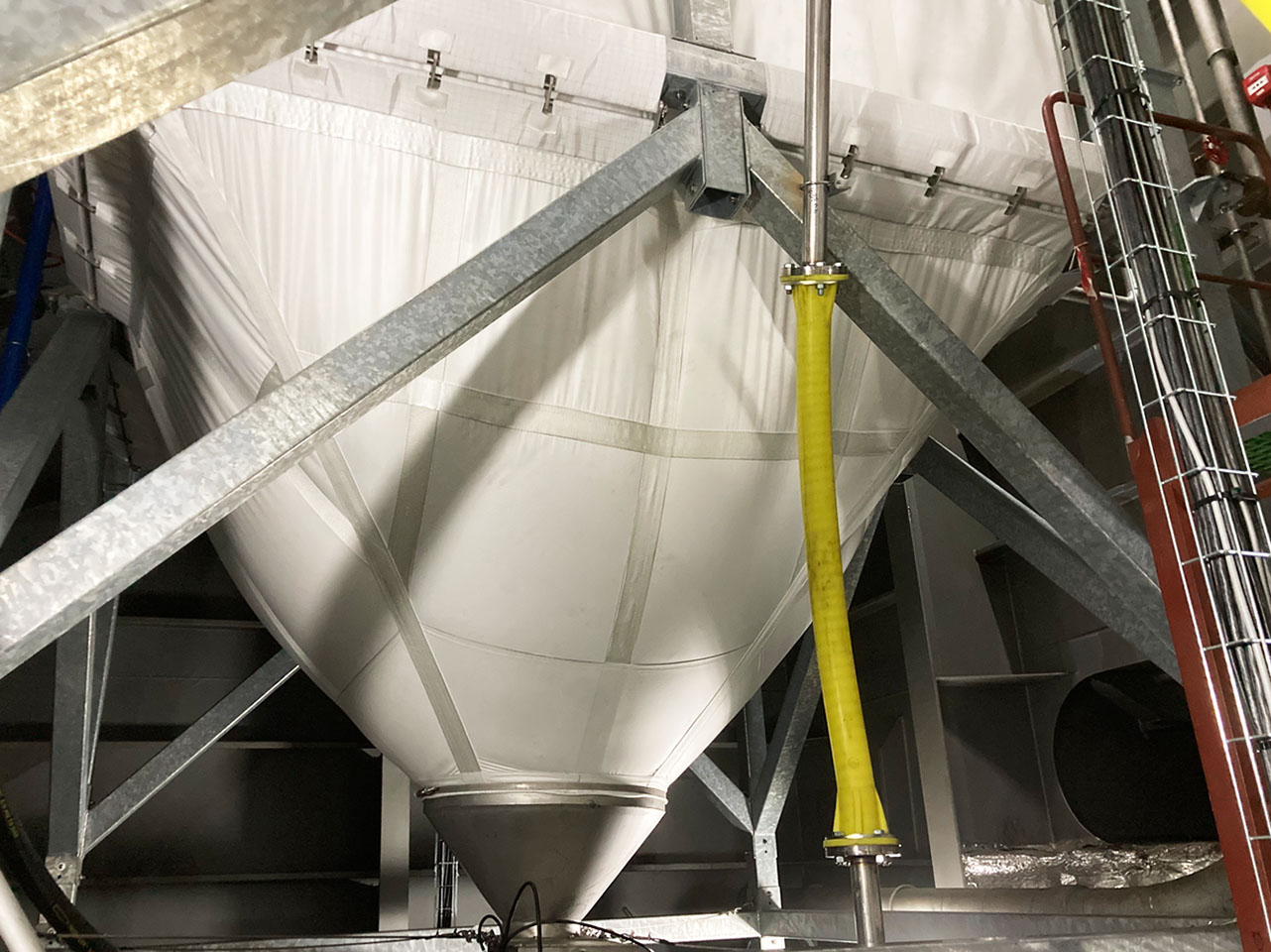
Flexible silo equipped with a vibrating bottom